





Walk into almost any climbing gym and you’ll see climbers loaded with gear—specialized shoes, colorful chalk bags, harnesses covered in gear loops, and enough metal hardware to look like a small expedition team. For someone new to the sport, it’s easy to assume all of that equipment is necessary just to begin. The reality is much simpler. Climbing is one of the few sports where beginners can start with very little gear. Much of what experienced climbers carry is designed for specific styles of climbing, outdoor conditions, or personal preferences that only become relevant later. If your goal is simply to start climbing in a gym, the equipment list is surprisingly short.
For most indoor climbers, only four pieces of personal gear truly matter at the beginning: climbing shoes, a harness, a belay device, and chalk with a chalk bag. Everything else you see in the gym can wait until you develop more experience or move into different types of climbing.
Climbing shoes are the one item you cannot skip. Regular sneakers simply do not provide the friction needed to stand on climbing holds. Climbing shoes use specialized rubber designed to grip both plastic gym holds and natural rock. When choosing your first pair, comfort matters far more than performance. Shoes that are painfully tight may look “serious,” but they will make every session miserable and shorten your time on the wall. A neutral, beginner-friendly model is almost always the right starting point. Popular options include the La Sportiva Tarantulace climbing shoes, known for comfort and durability, and the Black Diamond Momentum climbing shoes, which offers breathable materials and a forgiving fit for new climbers.
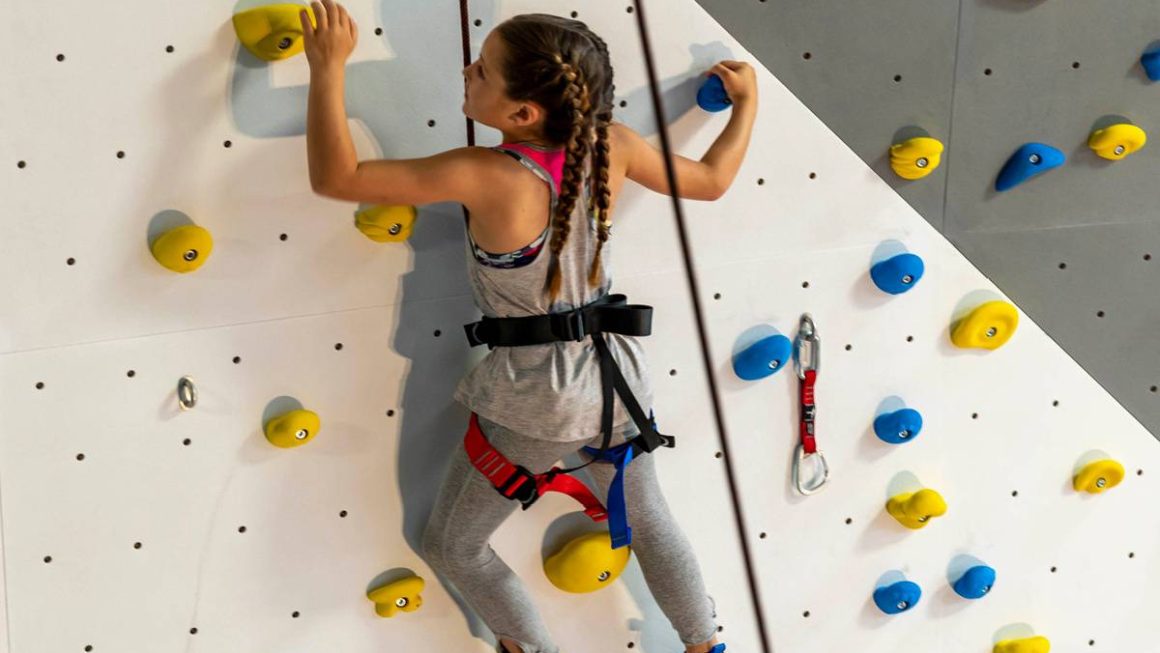
If you plan to climb with ropes, the next essential piece is a harness. This is the equipment that connects you safely to the rope system and supports your body when you fall or rest. While harness designs vary in weight, padding, and adjustability, beginners should prioritize comfort and fit rather than minimal weight. Look for a harness with a padded waist belt, comfortable leg loops, and at least four gear loops so you can grow into it later. Two well-known beginner-friendly models are the Black Diamond Momentum harness and the Petzl Corax climbing harness, both widely used by gym climbers and instructors.
The belay device is the tool your partner uses to control the rope while you climb. It creates friction so the belayer can hold your weight if you fall and lower you safely when the climb is finished. For beginners, assisted-braking devices are the safest place to start because they include a mechanism that helps lock the rope if the belayer loses grip. The most recognizable example is the Petzl GriGri belay device, which has become the industry standard in many gyms thanks to its reliability and ease of use. Many climbers learn belaying on this device, so partners are usually familiar with it.
The final essential is chalk and a chalk bag. Climbing chalk is simply magnesium carbonate, the same material used by gymnasts and weightlifters. Its purpose is straightforward: absorb sweat and improve friction between your hands and the holds. Dry hands grip better, and better grip makes climbing easier. Expensive chalk brands exist, but beginners do not need anything fancy. A simple bag of loose chalk and a basic chalk pouch attached to your harness will do the job perfectly well.
While these four items form the foundation of a climbing kit, most gyms allow beginners to rent some of them at first. Renting is often the smartest choice while you decide whether climbing will become a regular hobby. Shoes and harnesses are commonly available for a small fee, and many gyms include harness rental with the day pass. Some facilities also require climbers to use the gym’s own belay devices. If you only climb occasionally, renting makes financial sense. Once you reach roughly ten to fifteen sessions, however, owning your own gear usually becomes cheaper and far more comfortable.
New climbers are often tempted to buy additional equipment immediately, but most of it is unnecessary during the first months. Specialized climbing clothing, for example, is largely optional in a gym environment. Regular athletic clothing that allows free movement works perfectly well. Crash pads, which are essential for outdoor bouldering, are irrelevant indoors because the gym floor is already padded. Equipment like quickdraws, ropes, and traditional protection gear—cams and nuts used in outdoor climbing—are also unnecessary for beginners. Gyms provide ropes for top-rope routes and typically leave quickdraws permanently attached to lead climbing walls. Those items only become relevant once you transition to outdoor climbing.
A smarter approach is to build your gear collection gradually. In the first couple of months, buying shoes and a chalk bag is usually enough. As you begin climbing regularly and learning to belay, adding a harness makes sense. Later, once you are comfortable with rope systems and climb frequently, you can invest in your own belay device and other accessories. This step-by-step approach spreads out the cost while allowing you to understand what type of climbing you enjoy before committing to specialized gear.
Shopping wisely also helps keep costs under control. Climbing equipment changes very little from year to year, so last season’s models often perform just as well as the newest versions while costing significantly less. Major retail sales—especially around holidays—are also excellent opportunities to buy gear at a discount. Some items, such as shoes or harnesses in good condition, can occasionally be purchased used, but critical safety equipment like ropes and carabiners should always be bought new.
Finally, remember that climbing gear is life-support equipment. Even though modern gear is extremely reliable, it still requires regular inspection and proper care. Check your harness for frayed straps, inspect belay devices for sharp edges or damage, and watch for worn rubber on climbing shoes. Organizations such as the American Alpine Club regularly publish accident reports that remind climbers how important proper equipment maintenance can be. When gear shows significant wear or reaches the end of its recommended lifespan, replacing it is always the safer choice.
The most important takeaway is simple: you do not need a mountain of equipment to start climbing. A good pair of shoes, a reliable harness, a belay device, and some chalk are enough to begin building skills and confidence on the wall. Everything else can come later as your experience—and your curiosity about different styles of climbing—continues to grow.