

“Joining a climbing gym” now sits among phrases I never anticipated uttering—particularly the follow-through. Ten visits in my first month transformed suspicion into habit. My name is Spencer Spellman, and I acknowledge my condition.
Outdoor enthusiasm has always defined me, yet climbing occupied peripheral vision at best. Falling onto snow from snowboards or water from paddleboards seemed preferable to impact with stone. Personal fragility reinforced this aversion—childhood familiarity with emergency room personnel included staples for head lacerations, stitches spanning forearms from bicycle incidents, slings from dune buggy mishaps, and surgical finger repair following BB gun misadventure.
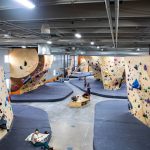
Months ago, Los Angeles friends transported me toward a climbing gym, entry secured through post-session donut bribery. Guest passes exhausted, I purchased a ten-pack. Those consumed within weeks, I committed to monthly membership. Now I dispense bouldering guidance—improbable evolution from initial reluctance.
Essential Bouldering Insights
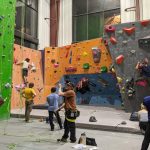
Begin with Companions: Despite independent tendencies, first visits demanded familiar presence. Safety briefings and technique tips from trusted friends, combined with ongoing encouragement and route advice, provided intelligence, comfort, and confidence unavailable through solo entry. The climbing community’s helpful, encouraging character surprised me—strangers offering form corrections, applause at route completion. This culture differs markedly from other outdoor pursuits.
Formal Instruction Accelerates Progress: Even with friendly introduction, structured lessons prove valuable. Introductory bouldering classes deliver personalized, hands-on guidance. Many gyms—including my Touchstone membership—offer complimentary instruction. Post-lesson independence becomes achievable.
Footwear Demands Respect: Climbing shoes differ fundamentally from street footwear. Online purchase without fitting constitutes error. Rental shoes serve initial sessions; gym staff provide sizing guidance, though reputable outdoor retailers offer superior expertise. Shoes must fit snugly without pain, matched to intended climbing style. My La Sportiva TarantuLace balanced value and comfort appropriately. As resident artist Hannah Sproul notes, exceptional footwear doesn’t create strong climbers—consistent practice does. Post-shoe acquisition, personalize with chalk and chalk bag—minimal investment with substantial finger preservation benefits.
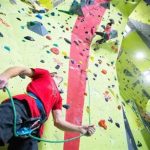
Falling Requires Practice: Early sessions included deliberate descent rehearsal—uncomfortable but essential. This broke dangerous instincts like arm extension during impact. Never catch falls with hands; never attempt stuck landings. Proper technique: knee bend upon foot contact, subsequent backward roll onto padded surface.
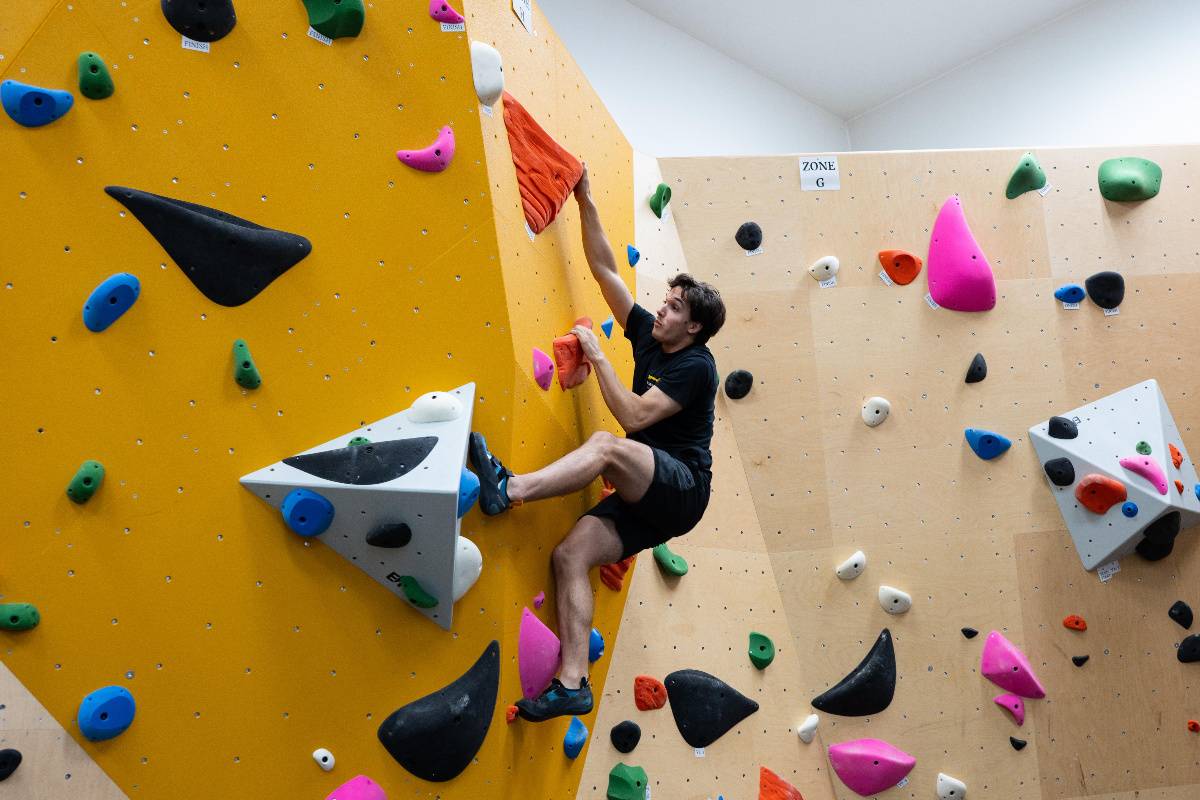
Understand Route Language: Problems—climbing routes—follow grading systems. American outdoor tradition employs Yosemite Decimal System; indoor facilities typically use V Scale beginning at V0 (beginner) ascending numerically. My current ability spans V0-V2. The problem-solving terminology resonates strategically; bouldering demands analysis absent from weightlifting or treadmill exercise. Observation reveals climbers studying sequences, hand-miming movements, exchanging “beta”—route intelligence. While intensive wave-reading-level knowledge isn’t initially necessary, V Scale basics and advanced climber observation prove instructive.
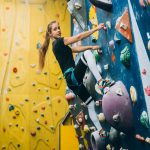
Biomechanical Efficiency: Straight arms and leg utilization remain my ongoing education. Default arm-dominant pulling wastes limited upper body capacity; legs possess superior strength and should bear primary responsibility. As athlete Shauna Coxsey advises, consider foot placement and standing through leg drive rather than arm pulling. Straight arm positioning—like carrying shopping bags—reduces strain compared to bent-arm resting.
Pacing Prevents Destruction: Climbing diverges from extended-duration outdoor activities like cycling or hiking. Continuous exertion risks overuse and injury. My typical hour includes two to three routes, brief recovery, repetition. Multiple consecutive routes without rest produced muscle tightness—correctable through adjusted pacing.
Mobility Investment: Post-initial-session soreness manifests in unexpected locations. Pre- and post-climb stretching, combined with regular attendance, eliminated this discomfort. Current physical and mental well-being exceeds previous baselines.
Final Observation
I began at thirty-four. My gym includes children, retirees, diverse backgrounds and abilities. Advanced status remains unlikely; outdoor bouldering remains uncertain. Yet bouldering has become cherished, unexpected pursuit. Like hiking and other favorites, the activity itself constitutes partial appeal—community integration, mental engagement, and infinite variety complete the attraction. Two hundred gym visits would yield two hundred distinct experiences.