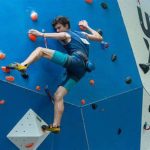
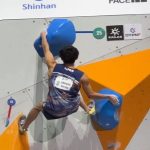
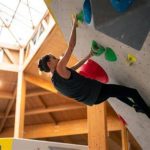



Yes—rock climbing builds real muscle. Regular climbers develop powerful forearms, strong backs, defined arms, and a tight, functional core. The physique that results is different from a traditional bodybuilder’s look: lean, athletic, and built for strength relative to body weight. Instead of maximizing muscle size, climbing develops muscles that work together efficiently to move your body through complex positions on the wall. If you’ve ever noticed how experienced climbers can support their entire body weight with their fingertips, you’ve already seen the result of this kind of training.
Climbing stimulates muscle growth through the same basic principles that drive all resistance training. Each move up the wall creates mechanical tension as you pull, hold positions, and stabilize your body. Over time this repeated stress forces muscles to adapt, becoming stronger and slightly larger. Research published in the Journal of Strength and Conditioning Research has shown that climbers tend to develop significantly greater grip strength and thicker forearm muscles compared with non-climbers. The difference is that climbing trains muscles within real movement patterns rather than isolating them one at a time. Instead of building bigger biceps in isolation, you build arms that work with your back, fingers, and core to solve physical problems on the wall.
Although climbing is technically a full-body workout, some muscle groups receive far more stimulus than others. Forearms are the most obvious example. Every hold you grab requires constant engagement of the finger flexors and forearm muscles, often in sustained contractions that last the entire climb. This is why experienced climbers develop such dense, defined forearms. Grip strength often improves quickly in the first few months, and many climbers notice the change in everyday tasks long before they see visible muscle growth.
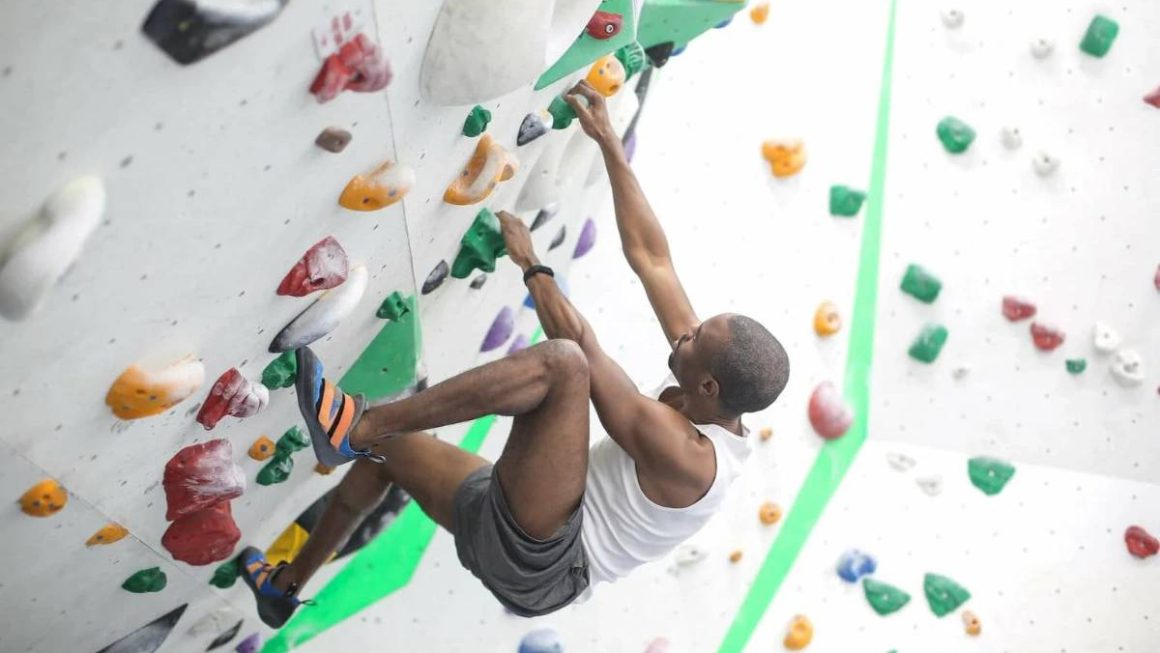
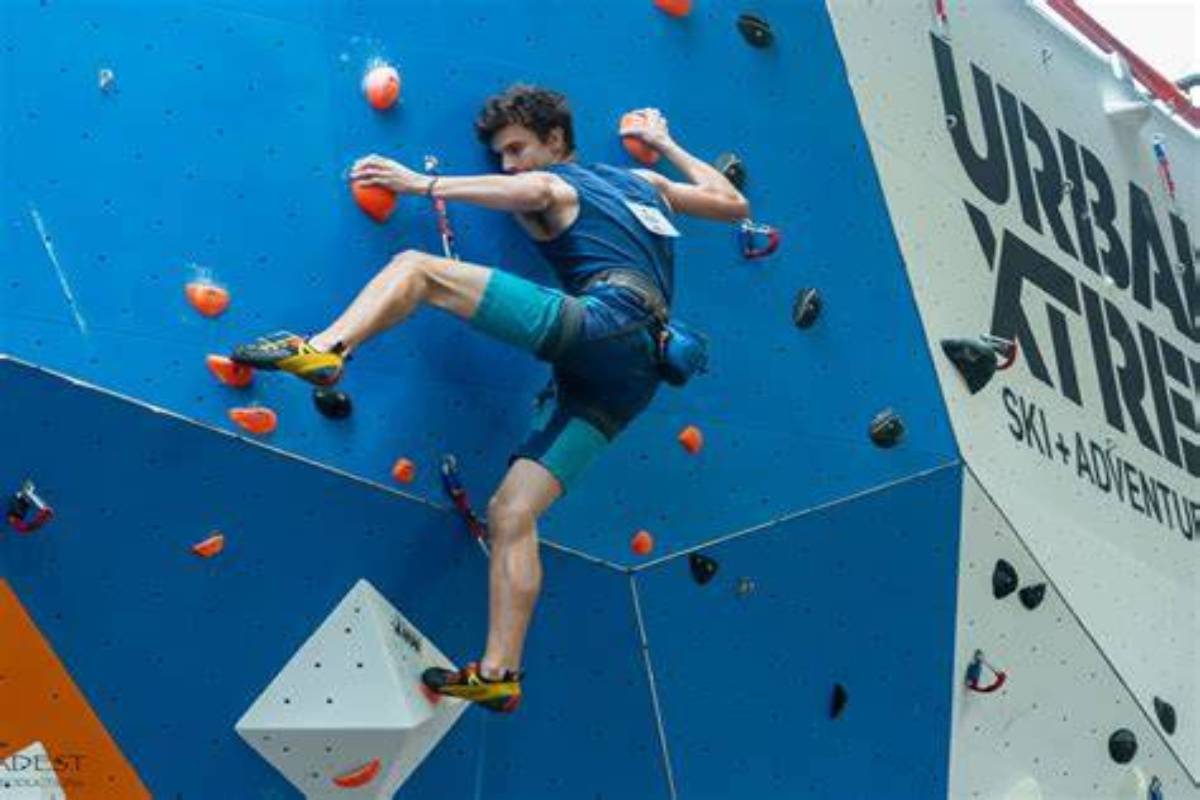
Your back—especially the latissimus dorsi—is another major driver of climbing power. Nearly every upward movement involves pulling through the lats in a motion similar to a pull-up. On steep terrain, these muscles work even harder to keep your body close to the wall and prevent swinging. Supporting muscles in the upper back, such as the trapezius and rhomboids, stabilize your shoulders while you reach for the next hold. Over time this combination creates the broad-shouldered, narrow-waisted “V” shape that many climbers develop.
The arms also play a significant role, particularly the biceps and surrounding muscles that flex the elbow. Climbing rarely isolates these muscles the way traditional curls do, but constant pulling and bent-arm holds build impressive functional strength. Many advanced moves require “lock-offs,” where you hold your body in place on a bent arm while searching for the next hold. These sustained contractions strengthen the biceps along with the brachialis and brachioradialis, creating balanced upper-arm strength rather than purely aesthetic muscle size.
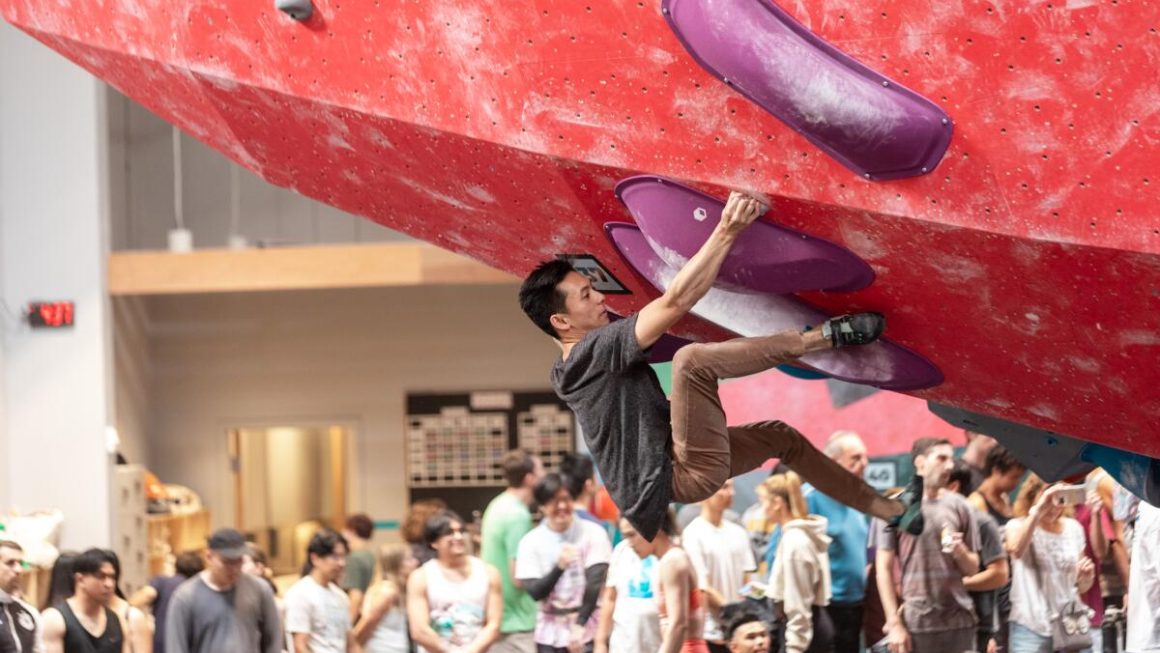
Core strength is equally important. Your abdominal muscles and obliques engage constantly to stabilize the body and maintain tension between hands and feet. Every time you lift a foot, shift your hips, or move across an overhang, the core prevents your lower body from swinging away from the wall. Unlike traditional abdominal exercises that move only in a single direction, climbing trains the core through dynamic, multi-directional movements that improve balance and posture along with strength.
Legs and glutes also contribute more than many beginners realize. Good climbing technique relies heavily on pushing with the legs rather than pulling entirely with the arms. Quadriceps engage when driving upward from footholds, glutes activate during high steps and extended reaches, and calves stabilize your body on small edges. While climbing strengthens the lower body, it usually doesn’t produce the same muscle growth there as it does in the upper body, which is why many climbers add squats or lunges to their training for balance.
Compared with traditional weight training, climbing develops a different kind of strength. Lifting weights makes it easy to apply progressive overload—adding small increments of weight each week to stimulate muscle growth. This approach is extremely effective for maximizing muscle size. Climbing, on the other hand, emphasizes coordination, body control, and relative strength. You may not develop the same muscle mass as a dedicated lifter, but the strength you gain translates directly into movement and athletic performance. Organizations like the American Council on Exercise often describe climbing and similar bodyweight activities as building “relative strength,” meaning strength in relation to body weight rather than absolute lifting capacity.
In terms of results, most beginners begin noticing strength improvements within four to six weeks of consistent climbing. Early gains are largely neurological—your nervous system becomes better at recruiting existing muscle fibers. Visible muscle changes tend to appear after about two to three months, often first in the forearms and shoulders. With regular sessions two or three times per week, many climbers see significant improvements in muscle definition and endurance within six months.
Climbing also tends to reshape body composition. Because the sport demands moving your own weight upward, excess body fat quickly becomes a disadvantage. A typical climbing session can burn several hundred calories depending on intensity, which often leads to gradual fat loss while building lean muscle. The result is a lighter, more athletic body rather than a bulky one. At the same time, climbing strengthens postural muscles in the back and core that counteract long hours of sitting, helping many climbers stand taller and move more comfortably in daily life.
For those who want to maximize muscle gains from climbing, a few strategies make a big difference. Climbing consistently—ideally two to three times per week—provides the repeated stimulus muscles need to grow. Challenging routes that push your limits create stronger adaptations than staying only on easy terrain. Varying styles also helps: bouldering builds explosive power, while longer routes develop muscular endurance. Many climbers eventually supplement their climbing with exercises such as pull-ups, rows, dead hangs, and core work to strengthen weak areas and improve overall performance.
Nutrition and recovery are just as important. Muscle growth depends on sufficient protein intake and adequate rest. Most active climbers benefit from consuming protein regularly throughout the day and sleeping seven to nine hours each night to allow muscles to repair and adapt. Over time, these habits—combined with consistent climbing—produce the lean, powerful strength that defines the climbing physique.
In short, rock climbing absolutely builds muscle, but it does so in a unique way. Instead of maximizing sheer size, it develops coordinated strength, endurance, and control across the entire body. The result is a form of fitness that not only looks athletic but also performs exceptionally well both on the wall and in everyday life.