
Mobility—your capacity to move freely and controllably through functional range of motion—determines what positions you can access and how effectively you can use them. In climbing, this translates directly to performance and injury resilience. Flexibility provides reach; stability provides power. Without both, technical execution collapses.
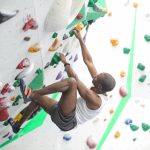
Consider the drop knee: impossible without hip rotation capacity, useless without core engagement to maintain tension. The high heel hook: unreachable without hamstring length, insecure without ankle stability. The powerful gaston: inaccessible without shoulder mobility, ineffective without scapular control. Each demanding position requires integrated mobility—flexibility and stability working in concert.
Shoulder Development
Superior shoulder mobility reduces muscular and tendinous strain while improving movement economy and activation quality.
Doorway Stretch: Position forearms on doorframe at varying angles—slightly above, at, and below ninety degrees. Each targets distinct shoulder and chest tissues. Lean forward until tension registers across anterior structures. Hold twenty to thirty seconds per position, breathing steadily.
Scapular Pull-ups: Hang straight-armed from bar. Elevate body by depressing and retracting shoulder blades without elbow flexion—controlled shrug motion. Pause at peak contraction, lower with intention. Band assistance accommodates insufficient strength; added weight increases challenge as capacity develops. Serves dual purpose as climbing and pull-up preparation.
Hip Development
Mobile hips enable lower body stabilization, high and wide foot placements, and close wall proximity. Effective hip work simultaneously recruits core and glutes, enhancing tension and control.
Gate Openers and Closers: Stand tall, core engaged. Drive one knee toward chest, foot flexed. Rotate hip externally, moving knee laterally—opening the gate. Return to center, foot down. Reverse for closing: knee initiates lateral, rotates medially, descends. Maintain posture throughout; smooth control supersedes range.
Frog Stretch: Begin quadruped, hands under shoulders, knees under hips. Gradually slide knees laterally to tolerance, rotating feet so inner arches and knee medials maintain floor contact. Lower forearms, elbows under shoulders, spine neutral. Allow hip descent toward ground. Hold sixty seconds, deepening with each exhalation within comfort limits.
Single-leg Frog Stretch: From forearm-supported position with knees roughly under hips, extend one leg straight laterally, opposite knee remaining flexed. Maintain hip centering under torso. Explore anterior, posterior, and lateral weight shifts to vary tissue emphasis. Repeat bilaterally, pursuing symmetry.
90/90 Hip Rotations: Sit tall, spine straight. Flex both knees to ninety degrees—anterior leg externally rotated, lateral leg internally rotated. Feet planted, torso forward-facing. Rotate through hips, reversing leg positions through center while maintaining angles and foot stability. Where tension concentrates, pause twenty to thirty seconds to convert movement into stretch. Target ten controlled rotations each direction.
Soft Tissue Preparation
Foam rolling—self-myofascial release available at most climbing facilities—targets tight musculature and fascial restrictions, disrupts adhesions, increases perfusion, and can enhance range of motion. However, rolling prepares tissue for movement rather than replacing active mobility work or strength development. Deploy as warm-up component and recovery support, not as comprehensive intervention.
Integration
Six hundred plus muscles compose the human body; systematic attention to their length and control yields profound climbing dividends. Shoulder and hip focus provides high-impact entry point for injury prevention and wall-transferable strength.
Select several drills for warm-up and cool-down implementation. Consistent application produces tangible returns: high steps become accessible, drop knees comfortable, heel hooks secure, overuse injuries diminish. Mobility investment compounds—small daily attention prevents large future limitations.